
Materials You Can’t Throw in a Dumpster (and What to Do Instead)
If you’ve ever stood over a dumpster mid-project thinking,
“Can I throw this in… or not?” — you’re not alone.
It’s one of the most common questions we get across Palm Beach.
And honestly, it’s better to ask before it’s already buried under everything else.
Because while dumpsters can handle a lot, there are a few things that are a hard no—for safety, legal, and disposal reasons.
Let’s break it down.
What You Can’t Throw in a Dumpster
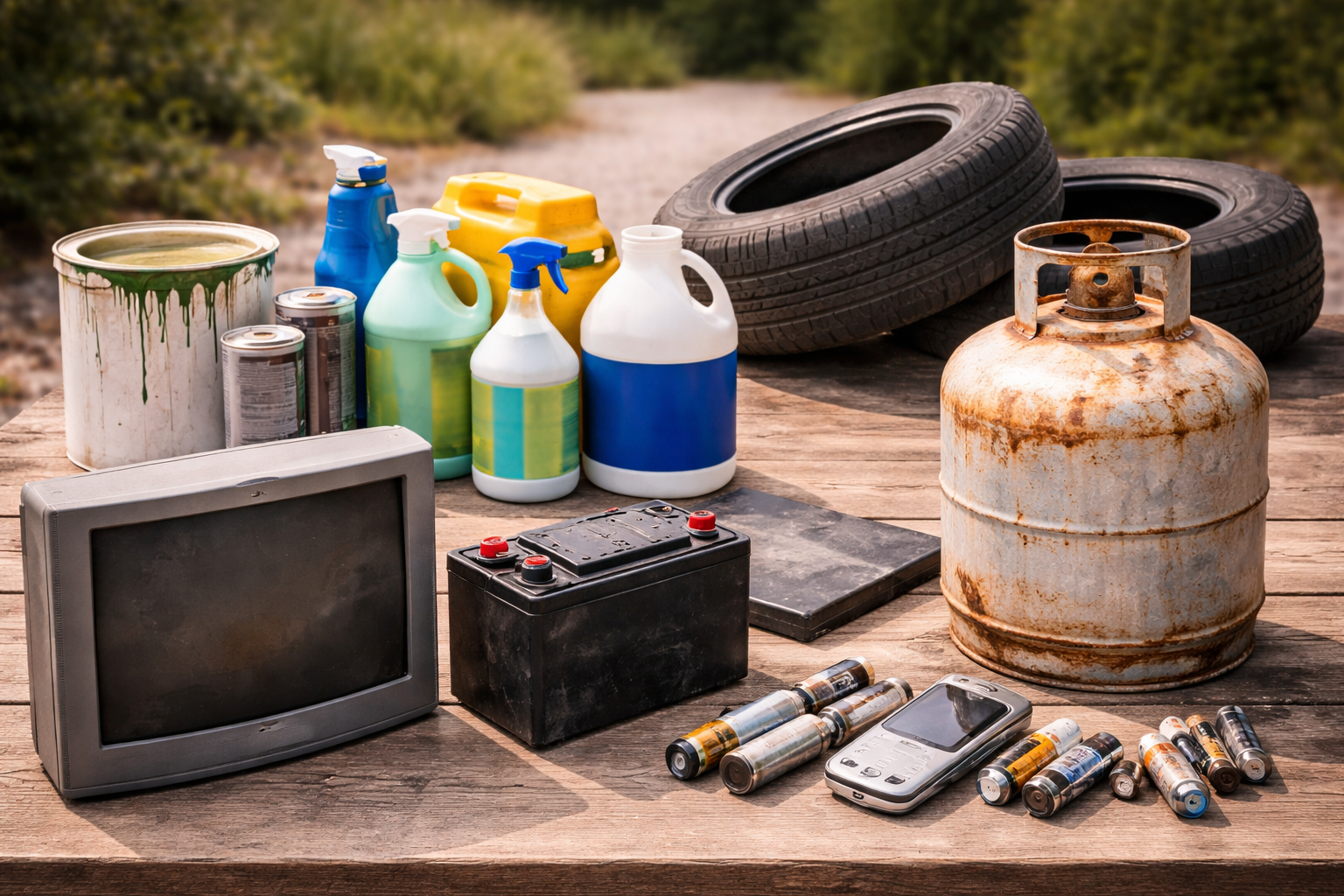
Here are the most common items that don’t belong in a standard dumpster:
1. Paint, Stains & Liquids
Wet paint
Wood stains
Solvents
Any liquid chemicals
Why: Liquids can leak, contaminate, and are classified as hazardous waste.
2. Batteries
Car batteries
Lithium batteries
Rechargeable tools
Why: They can leak acid or even cause fires.
3. Tires
Car tires
Truck tires
Why: Landfills have strict restrictions due to environmental impact.
4. Appliances with Refrigerant
Refrigerators
Freezers
AC units
Why: These contain refrigerants that require proper removal and disposal.
5. Propane Tanks & Pressurized Containers
Grill tanks
Gas cylinders
Why: These can explode under pressure and pose serious safety risks.
6. Electronics (E-Waste)
TVs
Computers
Monitors
Why: They contain materials that require specialized recycling.
7. Hazardous Materials
Chemicals
Asbestos
Medical waste
Why: These are strictly regulated and require special handling.
What Do You Do With These Instead?
Good news—there’s always a proper way to dispose of them.
Paint
Let it dry out (cat litter works well)
Or take it to a local disposal site
Electronics
Drop off at recycling centers
Some retailers accept old electronics
Tires
Most tire shops will take them for a small fee
Appliances
Scrap yards
Bulk pickup or specialty removal services
Chemicals
Local hazardous waste facilities (Palm Beach has designated drop-off days)
What Happens If You Throw Them In Anyway?
This is where things can slow down:
Pickup can be delayed
Items may need to be removed manually
Additional fees can apply
In some cases, the dumpster cannot be hauled at all
Not ideal when you’re trying to keep a project moving.
Easy Rule of Thumb
If it’s:
Liquid
Hazardous
Pressurized
Or electronic
It’s always worth double-checking before tossing it in.
Pro Tip
Set aside a small area during your project for “questionable items.”
Instead of guessing, keep them separate until you confirm.
Need a Quick Answer?
If you’re ever unsure, just ask.
A quick
“Can this go in?”
can save you time, money, and hassle later.
Most dumpster issues don’t come from big mistakes.
They come from small things no one told you upfront.
Now you know—and your project stays moving.
